Artificial Intelligence and the Hybrid Rhythms of Mobility Injustice
Public lecture by Prof. Mimi Sheller
- Date
- 24 November 2026
- Time
- 15:30 -17:00
- Room
- CREA (Muziekzaal)
Prof. Sheller argues that computational systems have become active participants in the co-production of hybrid human–machine rhythms that increasingly organise everyday urban (im)mobilities. She provides a conceptual and analytical framework for examining how AI reshapes the rhythmic organisation of urban mobilities, and establishes hybrid human–machine rhythms as a new object of urban mobility analysis.
Understanding AI-enabled urban (im)mobilities requires analysing not only what computational systems do, but how they reorganise the rhythms through which urban life is perceived, experienced and governed.
Discussants will be Dr Anna Nikolaeva and Dr Carolina Maurity Frossard.
This lecture is co-organised by the programme group Urban Planning and the Centre for Urban Studies, with the support of the Centre for Sustainable Development Studies and the programme group Political and Economic Geographies.
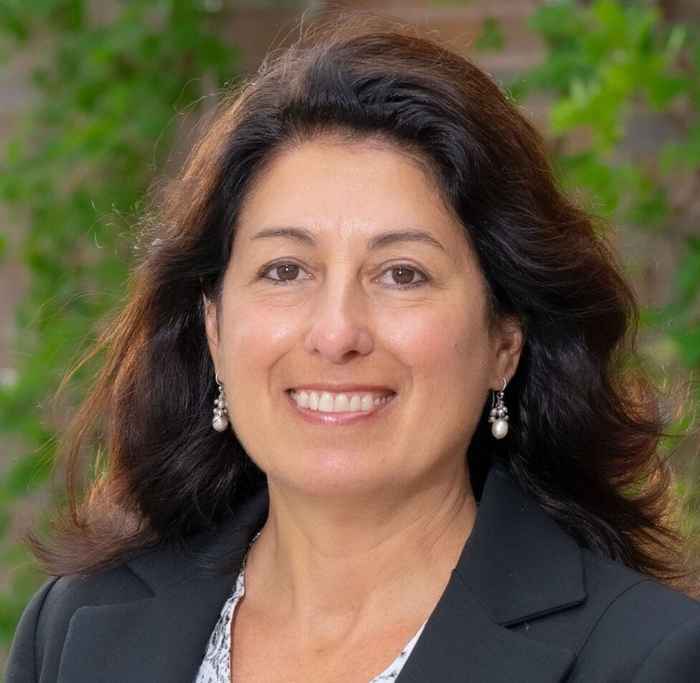
About the speaker
Mimi Sheller, Ph.D., is Professor of Integrative and Global Studies and was Inaugural Dean of The Global School at Worcester Polytechnic Institute, Massachusetts, USA (2021-2026). Sheller was founding co-editor of the journal Mobilities, Associate Editor of Transfers Journal of Mobility Studies and past President of the International Association for the History of Transport, Traffic and Mobility.
Recent books include the co-edited volumes Detours in the Mobility Transition (with Vincent Kaufmann, EPFL Press/Routledge, 2026) and Building Equitable Climate Adaptation in the US Caribbean (with Sarah Molinari, Palgrave, 2026); and monographs Advanced Introduction to Mobilities (Edward Elgar, 2021); Island Futures: Caribbean Survival in the Anthropocene (Duke University Press, 2020); and Mobility Justice: The Politics of Movement in an Age of Extremes (Verso, 2018).